
Be CLEAR: A Parent’s Guide to Nurturing Mental Health Through Honest Connection
In today’s fast-paced world, parents face more pressures than ever. Balancing work, family, and personal time can feel overwhelming, and the mental health of both parents and children is often strained in the process. As we recognize Mental Health Awareness Month, it’s crucial to explore practical frameworks that empower families to prioritize well-being. I developed the CLEAR framework that I use in all coaching sessions. Using CLEAR offers a powerful roadmap for parents who want to foster resilience, emotional intelligence, and open communication in their families.
The CLEAR framework: Confront the Truth, Let Go, Establish Direction, Act with Intention, and Reinforce—provides a step-by-step approach to navigating life’s challenges with honesty and purpose. Let’s explore how each element of CLEAR can help parents support their children’s mental health and their own.
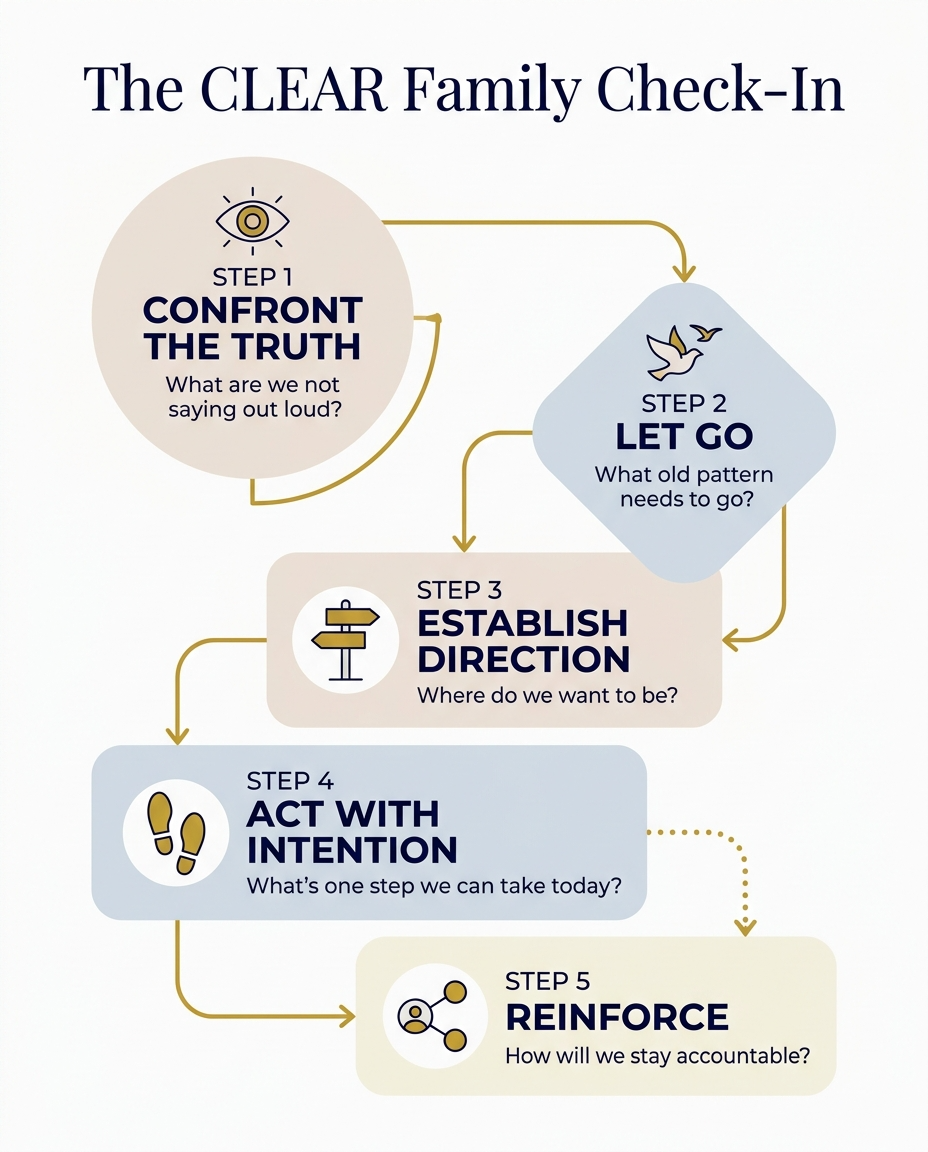
1. Confront the Truth: Building a Foundation of Honesty
Mental health struggles often thrive in silence and denial. For parents, confronting the truth means acknowledging when things are not okay. Whether it’s your child’s mood swings, your own stress, or the family’s overall emotional climate. It is not about blaming or shaming, but about seeing reality as it is.
How can you put this into practice?
●Check in regularly with yourself and your children. Ask open-ended questions: “How are you really feeling today?”
●Model vulnerability. Share your own feelings honestly, even when they’re difficult. This teaches your children that it’s okay to talk about emotions.
●Seek feedback. Invite your child to tell you what’s working and what’s not. Listen with an open mind.
By confronting the truth, you show your children that it’s safe to acknowledge struggles. This honesty is the first step toward healing and growth.
2. Let Go: Releasing What No Longer Serves You
Many families hold onto unhelpful patterns. It may be holding on to unrealistic expectations, outdated routines, or past mistakes. Letting go is about recognizing what’s weighing your family down and making the conscious choice to release it.
Try these strategies:
●Forgive yourself and others. Everyone makes mistakes. Holding onto guilt or resentment only adds stress.
●Challenge perfectionism. Allow your child—and yourself—to be imperfect. Growth happens through trial and error.
●Release comparison. Every family is unique. Don’t measure your progress against others.
Letting go creates space for healthier relationships and new possibilities. It teaches children how to bounce back and adapt, key components of healthy mental health habits.
3. Establish Direction: Setting a Course for Well-Being
Children thrive when they have clear boundaries and goals. Establishing direction involves defining what mental health means for your family and setting achievable intentions.
Consider:
●Family values. What matters most to your family—kindness, honesty, creativity? Write these down and revisit them often.
●Shared goals. Set collective goals such as spending more quality time together, practicing gratitude, or creating tech-free hours.
●Individual needs. Each family member may have different needs for rest, connection, or support. Honor these differences.
When you establish direction, you give your family a sense of purpose and stability. Children feel secure knowing what’s expected and where the family is headed.
4. Act with Intention: Turning Values into Daily Habits
It’s one thing to talk about mental health, but the purpose of action is to weave it into your daily lives. Acting with intention means making conscious choices that support well-being, even in small ways.
Action steps include:
●Create routines. Regular mealtimes, bedtime rituals, and family check-ins foster predictability and security.
●Prioritize mental health activities. Encourage mindfulness, physical activity, or creative expression as part of your routine.
●Model self-care. Let your children see you taking breaks, asking for help, or managing stress in healthy ways.
Intentional action transforms good intentions into a lived reality. Over time, these habits shape a family culture where mental health is valued and protected.
5. Reinforce: Celebrating Progress and Adapting as You Grow
Change does not happen overnight. Reinforcement is about celebrating small wins, providing ongoing encouragement, and being flexible as your family evolves.
Ways to reinforce positive change:
●Acknowledge effort, not just outcomes. Praise your children for trying new coping skills or opening up about their feelings.
●Reflect regularly. Ask: “What’s working well for us? What could we do differently?”
●Stay curious. As your children grow, their needs will change. Be willing to adapt your approach.
Reinforcement keeps your family on track and reminds everyone that mental health is a lifelong journey. It fosters a sense of achievement, hope, and resilience.
Why Being CLEAR Matters Now More Than Ever
The past few years have brought unprecedented challenges for families, including pandemics, social unrest, and rapid technological change. Rates of anxiety, depression, and burnout among both children and parents have risen. In this landscape, the CLEAR framework isn’t just helpful, it’s essential.
By embracing CLEAR, parents model the very skills their children need to thrive: honesty, flexibility, direction, mindful action, and perseverance. You show your children that it’s okay to face hard truths, let go of what hurts, and work together toward a healthier future.

Practical Tips to Start Today
●Start small. Pick one element of CLEAR to focus on this week. Maybe you’ll have a family meeting to “confront the truth” about stress, or set a new “direction” for your evening routine.
●Use clear language. When talking with your children, explain what you’re doing and why. “We’re letting go of old routines because we want more time together.”
●Be patient. Change takes time. Celebrate each step forward, no matter how small.
Resources for Parents
If you are struggling, feeling mentally heavy, or unsure where to start, please know this: you do not have to figure it out alone.
Support can look like reaching out to a mental health professional, reading resources that help you understand family well-being, joining a parent support group, or simply being honest about what you need before you reach a breaking point.
Clarity does not replace mental health support, but it can help you recognize when something is off, name what you are carrying, and take the next honest step.
Conclusion
Parenting will stretch you, challenge you, and reveal parts of you that are easy to ignore when everyone else needs something from you. That is why clarity matters.
Through the CLEAR framework — Confront the Truth, Let Go, Establish Direction, Act with Intention, and Reinforce — parents can begin creating homes where mental health is not hidden, emotions are not dismissed, and support becomes part of the family culture.
During Mental Health Awareness Month and beyond, I want to invite you to stop carrying confusion as if it were just part of the job.
Join me on May 26 for my workshop, Clarity is a Mental Health Strategy, where we will talk about how clarity can help parents better understand themselves, their needs, and the mental weight they have been carrying.
I also invite you to join my Facebook group, where we continue these conversations around parenting, identity, clarity, and emotional well-being.
If you are ready for deeper support, I would love to invite you to schedule a free consultation for Clarity in 30, my coaching program that uses the CLEAR framework to help parents stop living on autopilot and start leading their lives with intention.
You do not have to have it all figured out to begin.
You just have to be willing to get clear.


