
Your Competence Is Evidence
I've always been a strategic thinker. Whenever I enter a room, I look around, figure out what's going on, and think of ways to make things better. My kids and husband knew this about me and often relied on it. I planned everything—trips, homework schedules, church events, anything they needed. I kept it all running.
Over time, something shifted. That strength started to feel like a burden. I resented how much work this ability created for me at home. Why is no one else using their brain? We all have one.
Looking back, I realize my resentment wasn’t really about my strength. It was about how I used it and who I became because of it. I squeezed myself into the role of family logistics coordinator, and it didn’t fit who I truly was.
Now that my kids are grown, that same strength has helped me reconnect with myself in ways I never imagined. Whether it’s in my coaching business, my job as a suicide prevention program coordinator, or my social life, being a strategic, systems thinker has shaped me more than I realized. That part of me was always there. I just stopped seeing it as part of who I am and started seeing it as something others needed from me.
If you’re a parent who feels out of touch with yourself, this blog is for you. What if the hints about who you are have been right in front of you all along? What if your competence isn’t just about what you do, but proof of who you’ve always been?
When “Who Am I?” Feels Too Big
Asking yourself “Who am I?” can feel overwhelming when you’re busy parenting. You might know you’ve lost touch with yourself, but finding that person again can seem like a huge task. Where do you even begin?
Let me tell you: you don't have to search for a completely lost person. You are not starting from scratch. Pieces of your identity are already visible in the skills, instincts, and strengths you use every single day. The problem is that you can’t see them because you have been looking at them through a different lens. You only see them as more proof of what is expected of you.
Your competence can tell you so much about yourself. Instead of thinking, “What am I good at so I can take on more,” flip it and ask, “What does what I am good at tell me about who I am?”
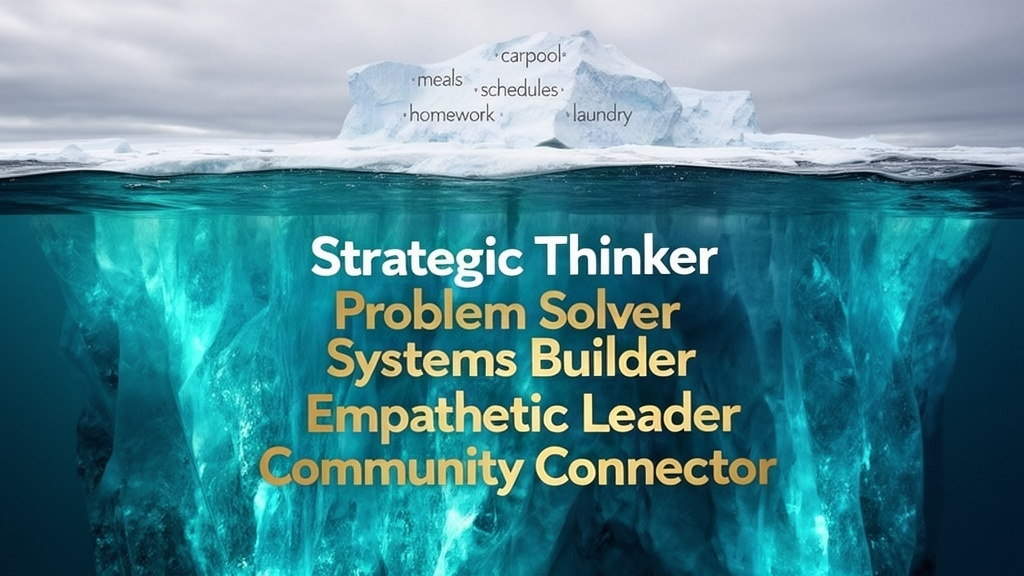
Look Beneath What You Do. What Does It Reveal?
Do you ever notice things that come easy to you but may be difficult for others? You may be the person who can calm a chaotic room or forecast plans well. Maybe you can read people’s emotions before they say a word or manage a household budget that would make a CFO sweat.
I may not know your exact strengths, but ask yourself: What does this ability say about who I am beneath all my roles?
If you are the strategic planner in your family, what does that tell you? It might reveal that you are a systems thinker. Someone who sees patterns and connections or who values order and intentionality. That is not just a skill. That is part of your identity.
If you are the one who holds space for big emotions, it might reveal that you are deeply empathetic and value emotional safety. It might show that you can sit with discomfort without needing to fix it. These things don't mean you are just a good parent; they mean it's part of your DNA.
If you are the person who can talk to anyone, build community wherever you go, or organize people toward a shared goal, what does that tell you? It might reveal that you are a connector, a leader, or someone who thrives in spaces where relationships and purpose intersect.
These strengths are not accidents. They are evidence that you’ve always been this kind of person, even before your current responsibilities—and they’re pointing you toward who you still get to become.
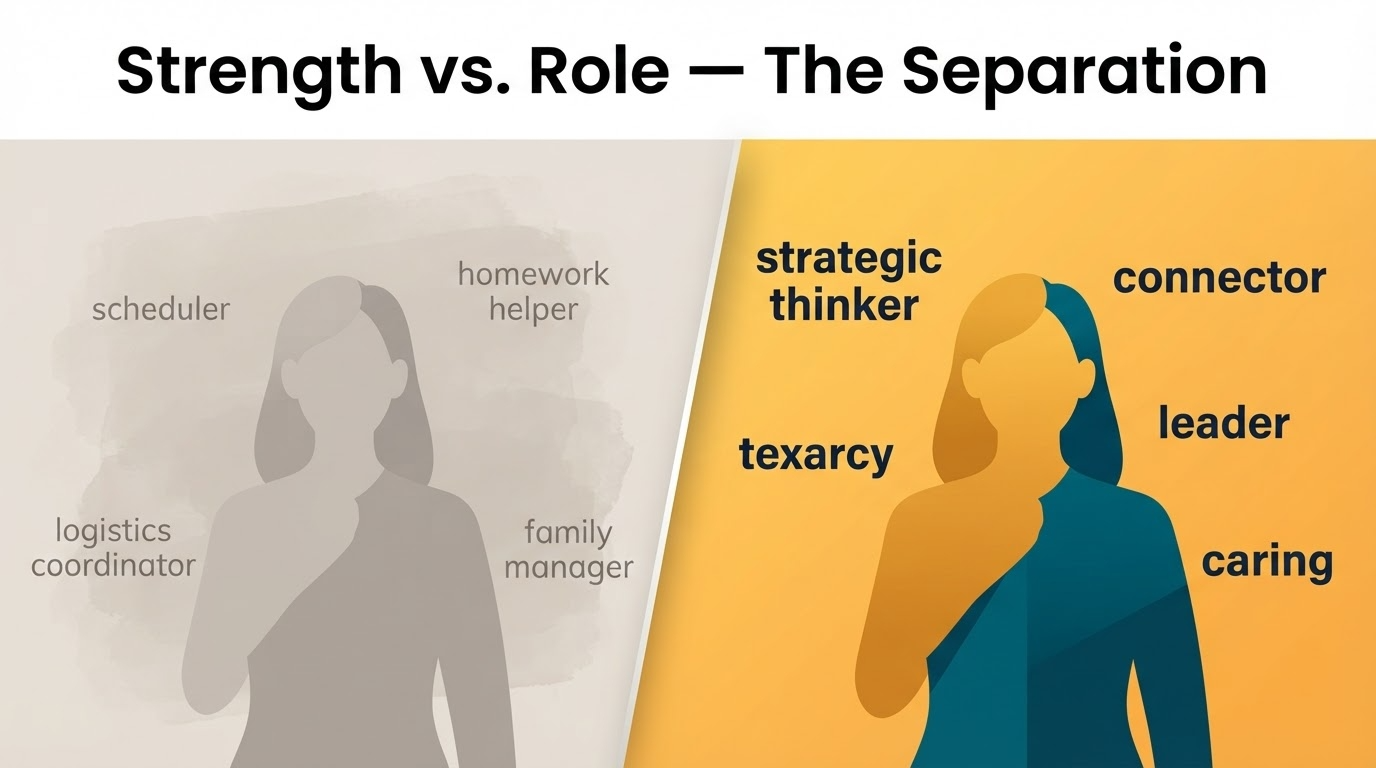
Separate the Strength from the Role
Here is where it gets tricky. High-performing parents are really good at using their strengths to serve everyone else. You have spent years applying your competence to your family's needs. Over time, the strength and the role can become so tangled that you cannot see one without the other.
You are not a strategic thinker because you plan everyone’s schedule. You plan everyone’s schedule because you are a strategic thinker. The skill existed before the role. It will exist after the role changes. Your job is to separate the two.
For military spouses, this can feel especially complicated. You have likely applied your strengths to survive and thrive in a lifestyle that demands constant adaptation. You coordinate moves, navigate healthcare systems in new states, and build community from scratch every few years. You hold down the home front during deployments, become an expert in resilience, resourcefulness, and making things work.
Those are not just survival skills. Those are leadership skills, problem-solving skills, and emotional intelligence. The question is, where else in your life do those strengths want to show up?
What Comes Easily to You That You Have Stopped Valuing?
High-performing parents tend to devalue what comes easily to them. If it feels natural, it must not be that important. If everyone can do it, it must not count.
Stop telling yourself that lie.
What comes easily to you isn't less valuable because it feels effortless. They are more valuable because they reveal something core about who you are. Those are the strengths that have been with you the longest. The ones you did not have to learn, but also the ones no one can take away from you.
What are the things you do that other people notice, but you brush off? What are the things people thank you for that you think are no big deal? What are the strengths you have stopped valuing because they have been weaponized into obligation?
Write them down. You need to see all the evidence that you already have in your life.
Competence and Enjoyment Are Not the Same Thing
Just because you are good at something does not mean it energizes you.
Competence and enjoyment are not the same thing. You can be excellent at something and still resent it. That is information you can use.
Ask yourself: Does this strength energize me, drain me, or does it depend on where I use it?
This question changed everything for me. I am a strategic thinker. That has not changed. But using that strength to manage my family’s logistics drained me. Using that same strength to design programs that prevent suicide and to guide parents back to themselves? That energizes me: same strength, different context, and completely different outcomes.
If a strength drains you, it does not mean the strength is bad. It means the role you are using it in might not be aligned with who you actually are.
Where Else Does This Version of You Want to Show Up?

Once you start to see your competence as evidence, the next question becomes: Where else does this version of me want to show up?
Not where does everyone else need me. Where do I want to be?
If you are a natural teacher, where else could that show up outside of helping with homework? If you are a problem solver, where else could that strength be applied in a way that feels meaningful to you? If you build culture and connection, where else do you want to create that?
Your strengths are not meant to stay locked inside the four walls of your home. They are meant to move and grow with you, defining you in spaces that feel alive and aligned.
You do not have to wait until your kids are grown to explore this. You do not have to wait until you have more time, more energy, or more clarity. You can start asking the question now: where does this version of me want to show up?
What Have Your Strengths Been Trying to Tell You About Who You Are?
Your competence has been trying to tell you something all along. It has been whispering clues about who you are beneath the roles you carry. The problem isn't that the clues aren't there. The problem is that you have been too exhausted, too buried, too busy to stop and read them.
You are more than what you do. Your competence is evidence of that. It is time to start reading the clues.
Ready to start reconnecting with who you are beneath the roles you carry?
Book a free consultation to explore how coaching can help you move from lost to found. Or download the Parent Reset Identity Workbook and Parent Reboot Journal to start uncovering the clues your competence has been leaving for you.
You do not have to stay lost. The evidence has been there all along.


