The Strongest Person in the House Might Be the Child Nobody Is Checking On
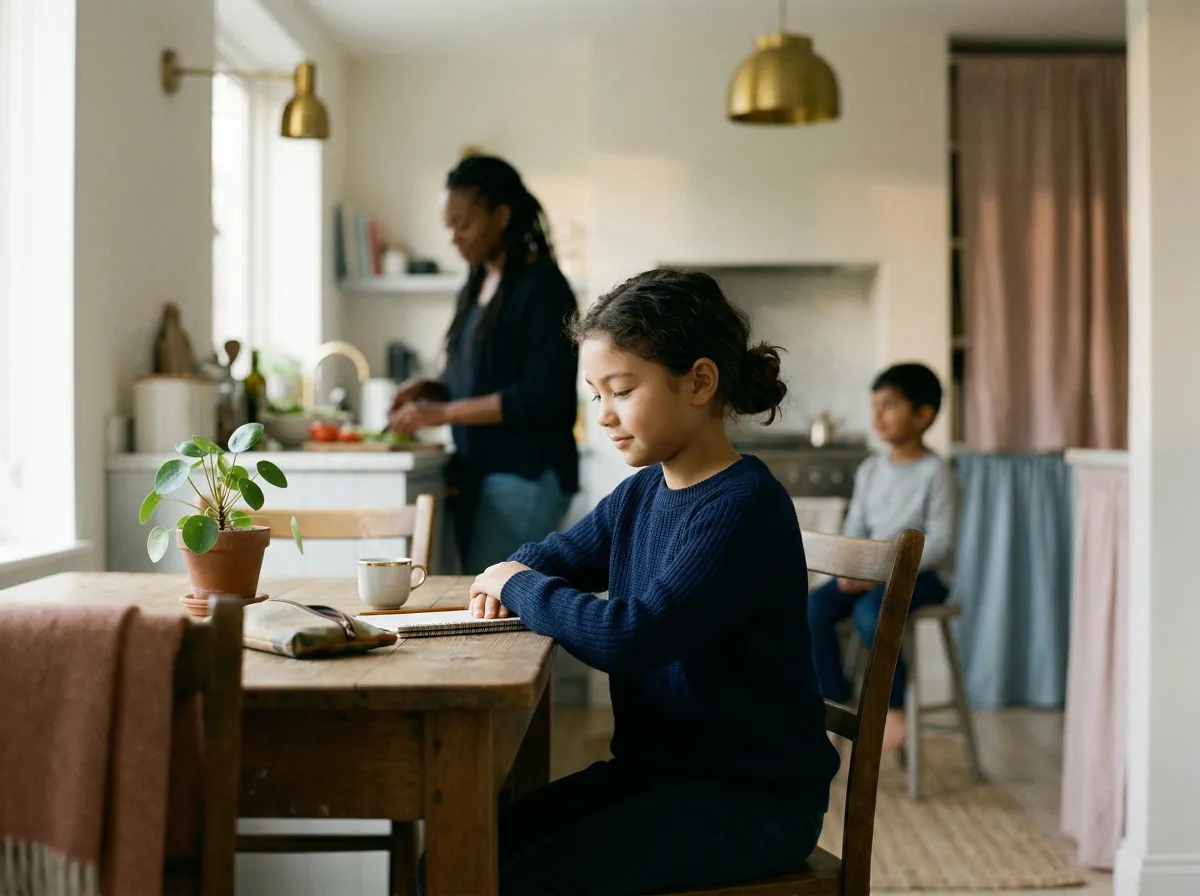
There is a child in some homes who gets praised without ever really being seen.
Not the child who acts out.
Not the child whose needs are loud.
Not the child who pulls all the attention in the room.
I am talking about the capable one that adults describe as mature, easy, independent, and strong. The one who does not ask for much or seems to understand without needing a long explanation.
That child gets celebrated fast, but sometimes that child is not okay. Sometimes that child has simply learned that there is no room for them to fall apart.
What many parents do not want to admit is that the reason the child gets missed is that the parent is so unclear, so emotionally buried, so lost inside their own survival mode, that they, too, are hiding and cannot fully see what is happening right in front of them.
This is a truth many parents are afraid to admit.
The Parent Who Is Lost Cannot Always Read the Room

Some parents love their children deeply yet remain emotionally unavailable.
That does not make them bad. It makes them human. It makes them overloaded. It makes them disconnected from themselves in ways they may not have had time to name.
Some parents have been carrying so much for so long that survival has become their personality.
They are tired in places where sleep does not touch. They are moving fast enough to keep life going, but not slow enough to notice what their child’s silence is actually saying. Some parents have gotten so used to scanning for emergencies instead of emotional truth.
Survival Mode Only Notices What Is Loud
Survival mode has terrible vision. It notices what is urgent, broken, or demanding. It is keen on what looks obvious. It responds to fire, noise, tears, conflict, and crisis. All the things that make people react fast.
What it does not always notice is the child who overfunctions.
It does not always pause long enough to ask why one child never seems to need anything. It does not slow down enough to wonder why one child is always helping, always agreeable, and always reading the room before speaking.
When a parent is unclear, they often become managers of behavior instead of observers of emotional patterns.
They correct what is disruptive, reward what is convenient, and praise what makes life easier. The child who never puts pressure on the system becomes the child who disappears into it. That child is often called strong. But strength is not always what you think you are seeing.
Some Children Do Not Become Strong. They Become Careful
There is a difference.
A truly supported child learns how to express emotion, ask for help, trust their voice, and know that their needs matter.
A careful child learns something else. They learn how not to be a problem, how to swallow disappointment, how to read adult moods, and how to stay out of the way. They learn how to carry more than they should because no one notices they are carrying it.
That is not always maturity. Sometimes it is self-protection in a small body.
The child who is praised for being “so easy” may actually be suppressing.
The child who is called “old for their age” may be emotionally overexposed.
The child who seems “so strong” may have decided that softness is unsafe.
That should shake us.
Too many adults compliment children for coping in ways that are actually cries wrapped in good behavior.
The Parent Who Hides Often Raises a Child Who Hides Too
This is where the conversation gets uncomfortable, and it should. A parent who has lost touch with themselves often teaches disconnection without ever meaning to.
A parent who never names their needs teaches a child to bury theirs.
A parent who confuses functioning with healing teaches a child to perform instead of process.
A parent who stays loyal to stress, chaos, exhaustion, and emotional silence teaches a child that this is what normal looks like.
Children do not just listen to what parents say. They absorb what their parents model. When a parent hides behind busyness, obligation, routine, perfectionism, or constant caretaking, the child often learns to do the same in their own way.
That is how emotional invisibility gets passed down. It is not through evil, but unawareness. Through families trying to survive, but who have forgotten how to be honest.
The “Good Kid” Can Be the Most Overlooked
Every family has patterns. Every house has roles. There is often the loud one, the sensitive one, the funny one, the difficult one, the achiever, the helper, or whatever role a parent chooses to name their child.
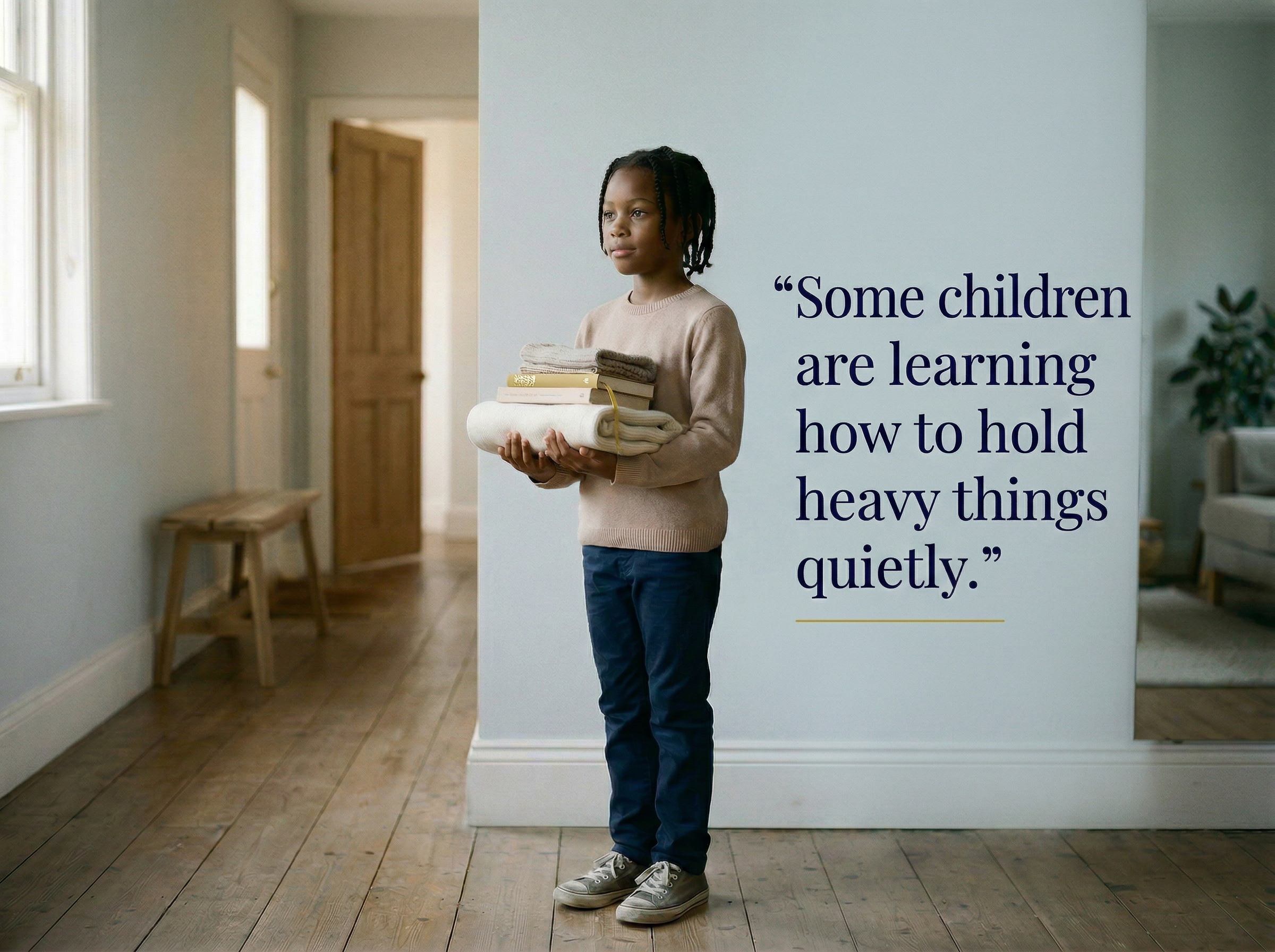
There is also the child who becomes emotionally low-maintenance. They may help with siblings. They may stay quiet when they are hurt. They may hold themselves together because they can feel the house is already carrying enough. They may look responsible, even impressive, but being the least disruptive child in the house does not mean they are the least affected.
Sometimes it means they learned early that the safest way to exist was to need less. That is not a badge of honor. That could be a warning sign.
The Children Who "Handle It Well" Are Not Always Okay
Children get praised for adapting so fast that adults sometimes miss what adaptation is costing them.
They move through change. They read the room. They adjust their feelings to fit the moment. They smile when they are hurting. They become “easy,” “mature,” and “so resilient.” That means the child who looks fine may not actually be fine. Some children are not thriving. Some are performing stability. Some are learning that being low maintenance gets rewarded, while having big feelings gets overlooked.
So the quiet child is not always the peaceful child. The flexible child is not always the secure child. The child who “understands” may simply be the child who has learned to carry emotional weight without asking for help.
Children are not supposed to earn care by being convenient. They are not supposed to be admired for how little they need. They are supposed to be noticed, emotionally protected, and given room to tell the truth about what they feel.
That takes adults who know how to look past performance.
That takes parents who do not confuse “they are coping” with “they are okay.”
That takes slowing down long enough to ask better questions, listen without rushing, and respond with the kind of steady presence that helps children feel safe.
So yes, celebrate your child’s strength.
But do not let strength become the reason nobody checks on their heart.
military life, children are praised for flexibility so quickly that people often forget to ask what that flexibility is costing them.
Clarity Is Not About the Parent Alone
This is why I talk so much about clarity.
Clarity is not just about a parent “finding themselves” to feel better. It is deeper than that. It is about becoming honest enough, grounded enough, and emotionally available enough to actually see what is happening in your own home.
An unclear parent only notices what is visible.
A clear parent starts noticing what is vulnerable.
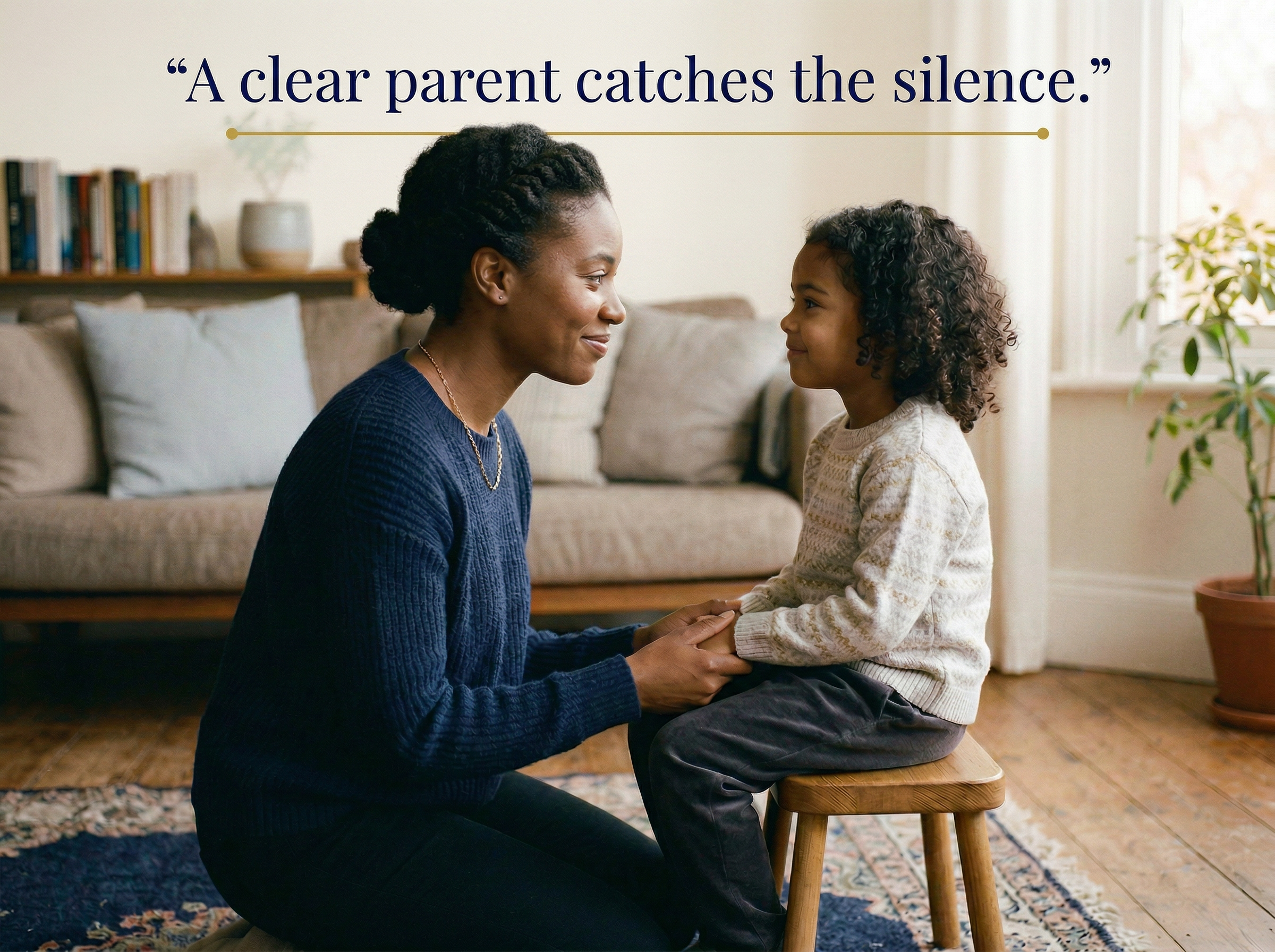
A clear parent catches the silence.
A clear parent notices the child who never asks for help.
A clear parent starts asking better questions.
A clear parent stops assuming that "easy" means "healthy".
Clarity changes the way you lead your home.
It changes how you respond to quietness.
It changes what you praise.
It changes what you overlook.
It changes the emotional atmosphere in which your child grows up.
That is why this matters.
Not because you need another self-help message or one more thing on your list, but because the clearer you become, the more you stop parenting on autopilot.
Some children do not need a more productive parent. They need a more present one.
Ask Yourself the Hard Questions
Which child in my home do I assume is always fine?
Have I confused quietness with peace?
Have I praised my child for being easy when they may actually be emotionally withdrawing?
Have I been so busy surviving that I stopped noticing emotional shifts?
What am I avoiding in myself that may be keeping me from seeing my child clearly?
Those questions are not meant to shame you. They are meant to wake you up.
Because some parents are waiting for their child to show distress in obvious ways before they pay attention. But not every hurting child gets loud. Some get helpful. Some get quiet. Some get strong too soon.
Reclaiming Yourself Might Be Part of Protecting Your Child
A lot of parents think doing their own inner work is selfish.
It is not.
It is leadership, protection, and one of the most loving things you can do for your family.
When you reconnect with yourself, you become more emotionally available. When you get honest about your own numbness, burnout, resentment, confusion, or identity loss, you stop projecting normal onto dysfunction. You stop calling disconnection maturity. You stop rewarding emotional disappearance because it makes the house easier to manage.
You begin to see again.
A clear vision matters because the child you think is the strongest may be the one carrying the most in silence.
The child nobody worries about may be the one who has learned not to ask.
The child everyone praises may be the one who has mistaken low maintenance for lovability.
That child does not just need your structure. That child needs your clarity.
Because until you get clear, you may keep missing what has been standing quietly in front of you the whole time.
The strongest person in the house might be the child nobody is checking on.
And that should stop every parent in their tracks.


