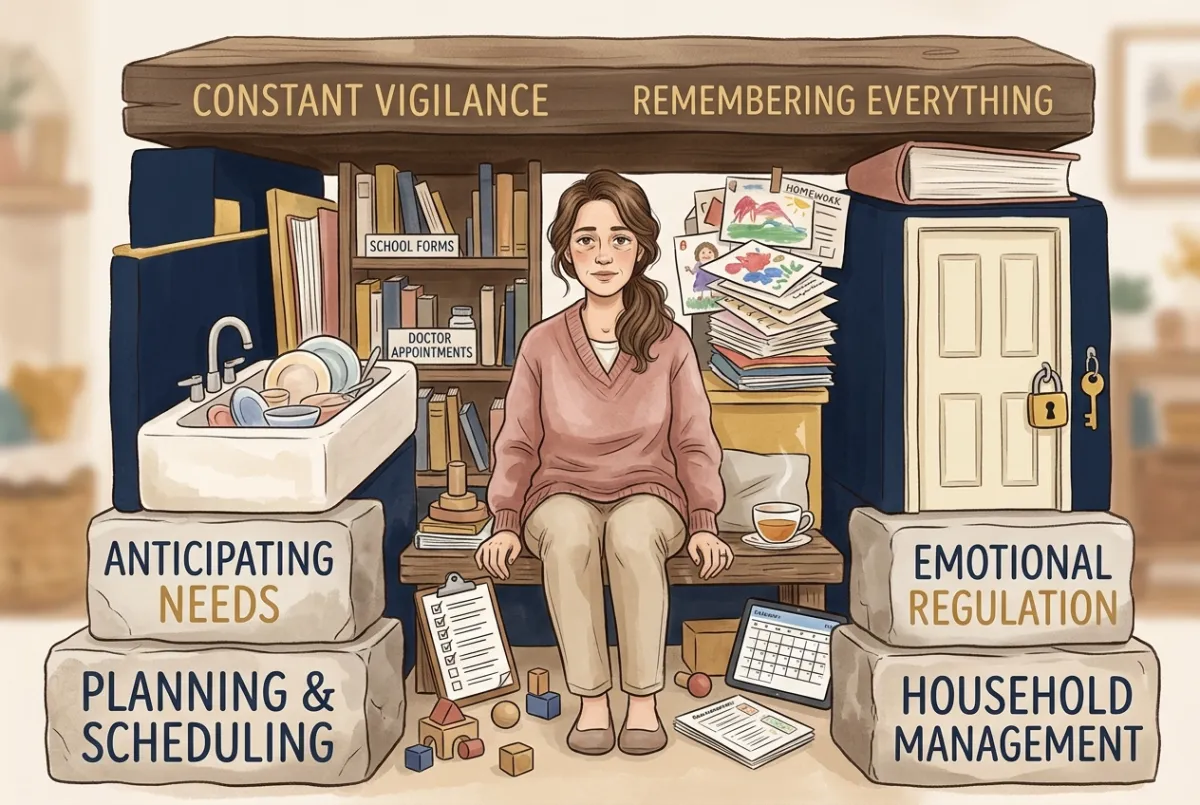
Who Will Save Me? Emotional Labor in Parenting
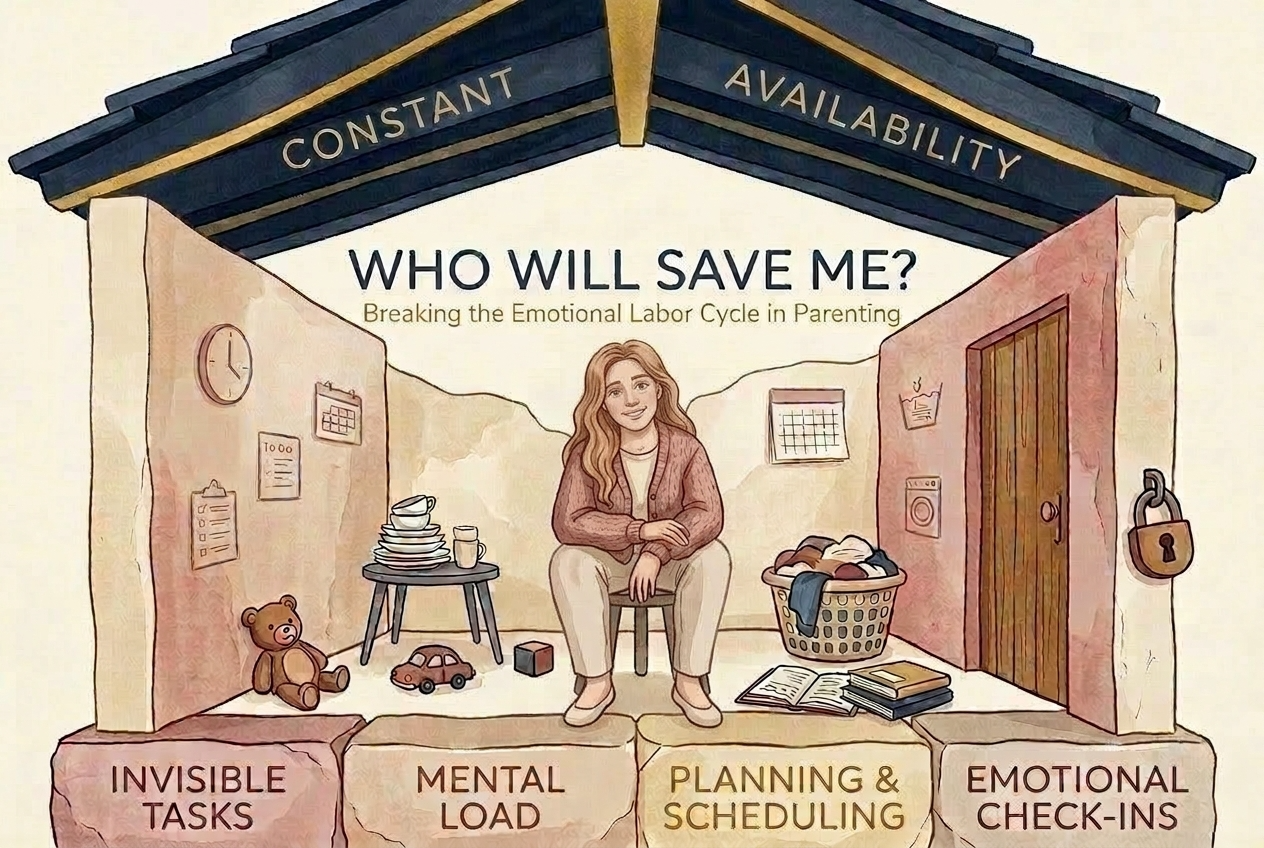
Who Will Save Me? Breaking the Emotional Labor Cycle in Parenting
There is a parent reading this right now who has already answered the question, Who will save me? And the answer was, no one.
That question takes me back to a powerful moment from the movie Antwone Fisher, when Antwone reads the line, “Who will cry for the little boy?” His therapist repeats it, and Antwone answers, “I will. I always do.” Whew. That line lands deep because parenting can feel like that sometimes. You become the one who carries, the one who comforts, the one who keeps showing up, and somehow, you are also the one left tending to your own pain in silence.
So let me ask you this: What is your cry? Who is crying for you? Who is checking on the one everyone depends on? Who is noticing the parent who keeps holding it all together while quietly wondering what would happen if they stopped?
These are not dramatic questions. They are honest ones. They rise in the quiet moments. In the moments when everyone knows how to reach for you, but very few know how to check on you. In the moments when you are holding everything together and wondering what happens if you stop.
This is the emotional labor cycle many parents live in for years without ever naming. Everyone knows how to reach for you, but very few know how to reach back for you. And when that becomes your normal, you start carrying emotional weight that was never meant to be yours alone.
The Architecture of the Trap: How You Became the Family’s Shock Absorber
There was a moment, and you probably cannot pinpoint exactly when it happened, that you became the emotional infrastructure of your family. It was not a formal appointment. No one sat you down and said, “You will be the person who holds this together.” Instead, it happened through small decisions that felt reasonable at the time, and sometimes even necessary.
The first time your child fell and looked to you for permission to cry, and you smiled and said, “You are okay, you are so strong,” you taught them where to bring their feelings. Not to themselves, but to you.
The first time your partner said, “I do not know how to handle this,” and you instinctively had three solutions ready, you became the problem-solver. Not the equal partner working through it together, but the one with the answers.
The first time someone in your family had a crisis, and you were the one who knew what to do, who stayed calm, who kept moving forward, you were promoted. Without your consent. Without even realizing it was happening.
Now you are the one everyone reaches for. The emotional life raft. The crisis manager. The one who knows. The one who can handle it. The one who does not fall apart, because if you do, the whole system collapses.
This is not love. This is not a strength. This is architecture.
The Foundation: You Were Taught This
You did not invent this role. You inherited it, brick by brick, from everyone who came before you and every message that shaped how you understand your worth.
Maybe you grew up watching a parent who was the strong one. The one who did not show weakness. The one who handled everything so everyone else could be okay. You learned that being needed meant being loved. You learned that sacrifice was the highest form of care. You learned that your feelings mattered less than your function.
Or perhaps you grew up in chaos, and you swore you would be different. You would be the stable one, the reliable one, the one who had it figured out. You would never let your family feel the uncertainty you felt, so you built yourself into a fortress. Strong walls. No cracks. No vulnerability showing.
Or maybe you were told early on by a teacher, a coach, or a family member, “You are so mature for your age. You are so responsible.” Somewhere along the way, you began to believe that being mature meant not having needs. It meant being the adult in every room, even when you were still learning what that meant.
Whatever your story, you learned this foundational truth: your value is measured by how much you can carry.
The Walls: When Your Needs Become Everyone Else’s Resources
Once you become the person who handles things, your family starts treating your capacity as a shared resource. Not out of malice, but out of habit and convenience. Your emotional availability becomes like the family Wi-Fi: always on, always accessible, always expected to work.
Your child has a meltdown at eleven o’clock at night, and you are the one who knows how to talk them down. Not because your partner cannot, but because you are the one who does. Somewhere along the way, “I am the one who does” became “I am the only one who can.”
Your partner is stressed about work, and they come to you. Not because you are a therapist, but because you have proven you can hold their worry without falling apart. You have become the emotional container for their anxiety, their frustration, and their uncertainty.
Your extended family calls you with their problems. Your friends text you when they are struggling. Your kids look to you first, not second. Your community knows your number because you answer. Always.
And you keep saying yes. You keep holding space. You keep being strong. You keep managing the emotional temperature of your entire ecosystem because what else are you going to do? Let them down?
The walls of this structure get higher and thicker. You become better at managing emotions, reading the room, and anticipating needs before anyone has to ask. You develop a kind of emotional radar that feels almost supernatural. You can sense tension before anyone speaks. You know what your child needs before they do. You can feel your partner’s stress in the air.
And everyone around you becomes dependent on this superpower, even as you become more and more imprisoned by it.
The Roof: The Belief That Protects the Whole Structure
None of this works without a belief system holding it up, and that belief is deceptive. You believe, “If I do not do this, it will not get done. If I stop being strong, everything falls apart.”
It sounds responsible. It sounds mature. It sounds like love.
But it is actually control disguised as care.
This belief system requires you to underestimate everyone around you. It requires you to believe that your way of handling things is the right way and the only way. It requires you to convince yourself that your kids cannot manage their own emotions, that your partner cannot solve problems, and that your family cannot function without you as the central nervous system.
Most importantly, it requires you to overestimate yourself. It requires you to believe that you are somehow superhuman, that your emotional capacity is infinite, that rest is irresponsible, and that having your own crisis would be catastrophic.
So you do not rest. You do not have a crisis. You do not ask for help. You do not take up space. You do not have needs that matter as much as everyone else’s needs.
You just keep holding, and the structure stays intact while everyone believes it cannot stand without you.
The Locked Door: The Moment You Realize You Cannot Leave
At some point, maybe it is a Tuesday morning, maybe it is three o’clock in the morning when you cannot sleep, maybe it is while sitting alone in your car, you realize something: you actually cannot stop.
Not because you do not want to, but because you have made yourself so essential that stopping feels like abandonment. Stopping feels like letting everyone down. Stopping feels like choosing yourself over your family, and you were never taught that those things could be the same thing.
You were never taught that taking care of yourself is taking care of your family. That your survival is needed first. That your needs are not negotiable luxuries, but non-negotiable necessities, just like oxygen.
You look around at the structure you have built, this architecture where you are the only load-bearing wall, and you realize something that makes your chest tight: I am trapped.
The walls are closing in. The roof is heavy. The foundation is cracking under the weight of being everything to everyone. And you cannot find the exit.
What you do not realize is that the walls are not locked from the outside. The lock is on the inside, and the only one with the key is you.
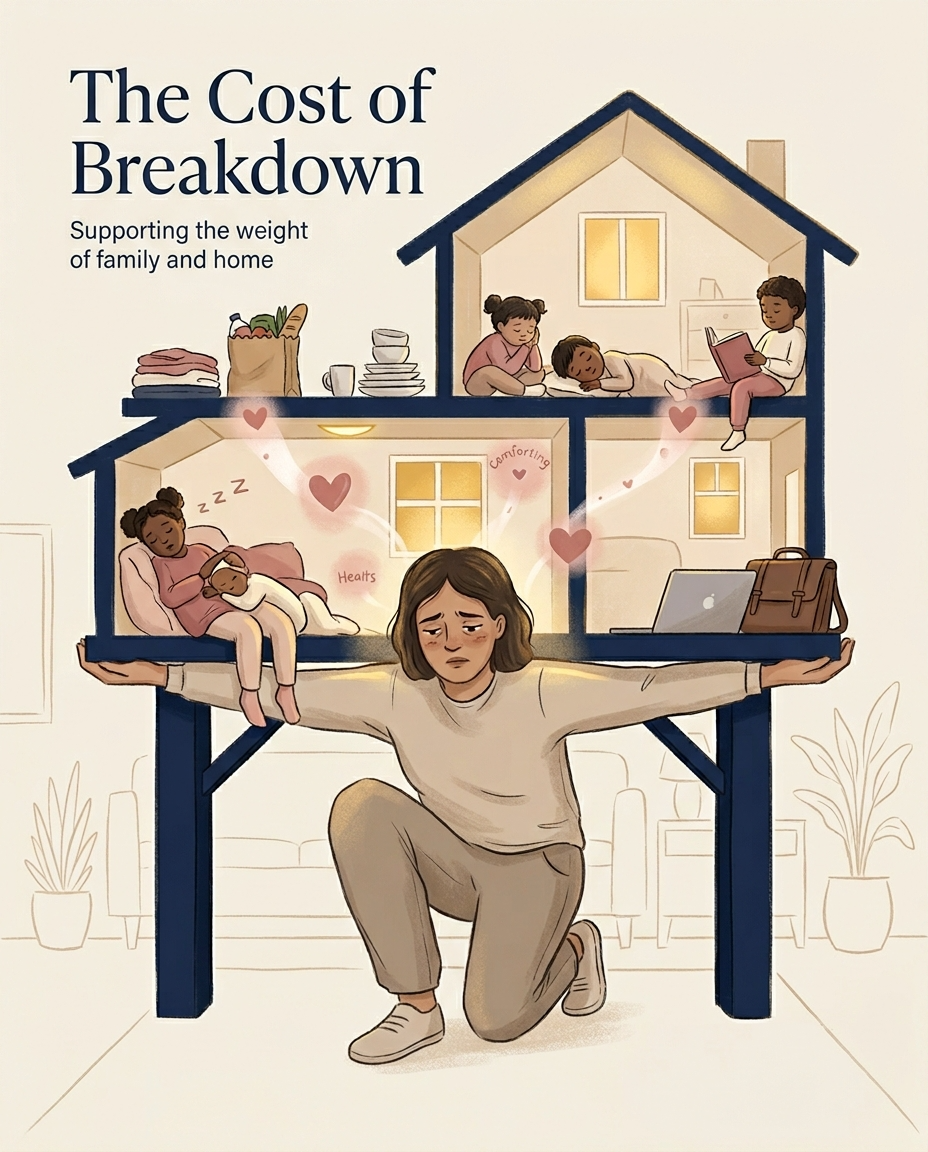
What It Costs to Stay Inside
You cannot pour from an empty cup. You have probably heard this a thousand times, and you have probably dismissed it a thousand times, because you have learned to pour from a cup that is not just empty, but actually bleeding.
But this is not about bubble baths or spa days or stolen moments of peace. This is about what staying in this architecture actually costs you.
It costs you your own crisis response. You cannot fall apart because no one will catch you. So you do not. For years, you do not. You become so practiced at holding yourself together that you forget how to let go. Your nervous system stays locked in survival mode, constantly vigilant, constantly managing, constantly bracing for the next thing that needs your attention.
It costs you your intuition. You have learned to read everyone else so expertly, to anticipate their needs, and to interpret their silence so well that you have lost the ability to read yourself. You do not know what you actually want anymore. You cannot hear your own voice over the noise of everyone else’s needs.
It costs you your anger. You do not get to be angry. Angry people do not hold the ship together. Angry people do not sacrifice. Angry people have boundaries and expectations and limits. So you swallow it. You minimize it. You become so practiced at understanding why other people behave the way they do that you never get to simply be furious.
It costs you your future self. The person you wanted to become, the dreams you had before parenting consumed everything, the version of you that had ambitions and passions and a life that was about more than managing everyone else’s survival, that person got shelved indefinitely. You tell yourself it is temporary, that you will get back to her someday, but someday keeps not coming.
So what this is really costing you is this: you are teaching everyone around you that this is normal. That emotional capacity is infinite. That sacrifice is the highest form of love. That self-abandonment is the goal.
The Question That Changes Everything
When was the last time you were genuinely surprised by joy? Not the joy of seeing your kids happy, your family functioning, or your partner proud of you, but your joy. The kind that catches you off guard because you have not made space for it in so long.
Who knows what you actually need right now? Not what you think you should need, not what would be convenient or easy or practical, but what you actually need. If you cannot answer that question, that is the problem we need to solve.
If you could not be strong for anyone for twenty-four hours, if you had complete permission to fall apart, what would break? What have you been holding together that would finally collapse if you stopped muscling through?
The real question is, what would happen if you let someone save you?
The trap is not that you are doing too much. The trap is that you have made yourself the only option. The way out is not about doing less. It is about letting other people become capable. It is about redistributing the weight instead of carrying it alone.
It is about finally opening that locked door from the inside and stepping out.
The question is not, “Who will save me?” The question is: Will you finally let someone try?
If this blog hit home, it is because too many parents have learned how to carry everything except themselves. You do not have to keep holding it all alone. Join my community or take the next step toward reconnecting with who you are outside of survival mode and schedule a free consultation with me.


