
Summer Screen Time Hits Different When Screens Were Part of School All Year
When summer screen time is not just about bad habits, but about the reality working parents are carrying
Screen time is such a common word today for parents. This words becomes even louder during summer months. Screens are everywhere in summer—TVs flickering, laptops open, tablets buying you a precious half hour, and kids reaching for your phone. That nagging voice says you should do better, but the reality is that screens aren’t just about distraction anymore. They’re part of school, connection, and keeping the day running. By the time summer arrives, most families are already living in a digital routine, and parents are simply trying to navigate the new normal.
Education Week reported that by March 2021, 84% of district leaders said they were providing a device for every elementary student, and 90% said the same for every middle and high school student. That means screen-based learning is not just a teen issue. For many children, it begins in elementary school.
The National Center for Education Statistics found that by the beginning of the 2021–22 school year, 96% of public schools reported providing digital devices to students who needed them. In other words, digital learning is not a rare exception. It is part of the normal school experience for many children.
So when parents try to “cut screen time” in the summer, they are often not starting from zero.
They are trying to reset a relationship with screens that has already been shaped by school, homework, entertainment, and modern family life.
Sometimes the tablet, TV, phone, and computer are not the problem.
Sometimes they are holding what the village dropped.
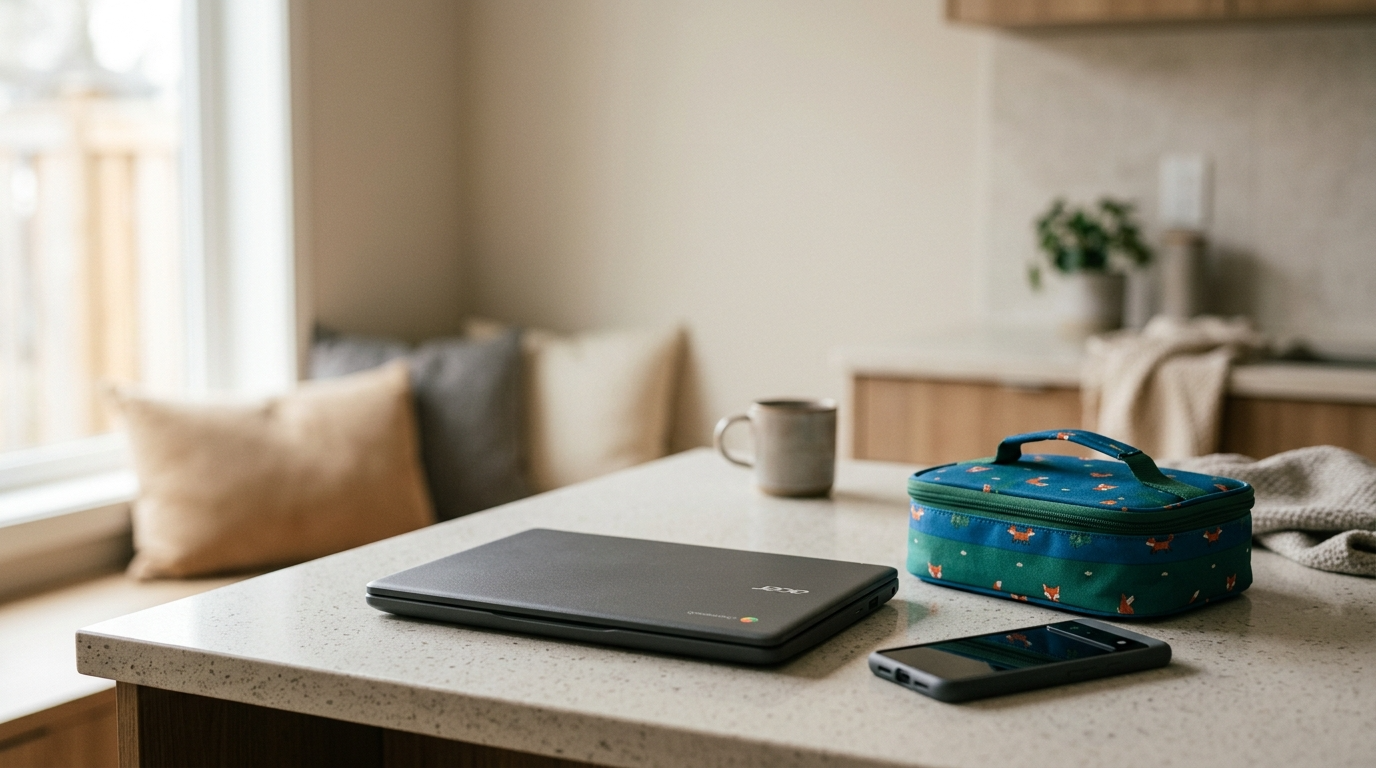
The real problem during summer is not always too much screen time.
It’s too little support. Too little affordable childcare. Too few breaks. Not enough help for parents who are expected to work, provide, manage a household, and still make summer magical.
Most conversations skip over this reality. We talk about screens as if they exist in a vacuum, when really, they’re filling gaps—gaps in supervision, structure, energy, and the support that once came from a community.
That’s why shame is such a poor teacher. It won’t give you more energy or build a better summer rhythm. It only leaves already-tired parents feeling like they’re failing for simply making it through the day.
By the Time Kids Are Older, Digital Schoolwork Is Already Normal
This gets even more obvious with tweens and teens.
A Common Sense Media survey of children ages 8–18 found that daily computer use for homework had jumped sharply. Among tweens ages 8–12, daily computer use for homework rose from 11% to 27%. Among teens ages 13–18, it rose from 29% to 59%. Tweens averaged 15 minutes a day doing homework on computers, while teens averaged 41 minutes.
So when summer comes, and parents are trying to pull back, they are not simply fighting “bad habits.” They are dealing with habits that were reinforced all year long.
A screen was where your child learned.
A screen was where assignments lived.
A screen was where teachers posted.
A screen was how work got done.
That does not mean all screen time is healthy.
It does mean the conversation needs more honesty and less oversimplification.
Not All Screen Time Is the Same
This is one of the biggest mindset shifts parents need.
A child using a laptop for school is not the same as a child getting lost on YouTube.
A family movie night is not the same as hours of mindless TV.
A phone in a tween’s pocket is not the same as shared screen time in the living room.
The American Academy of Pediatrics says there is no single school screen time limit and encourages adults to focus on active versus passive use instead. That is a powerful framework for summer, too.
That means the better question is not:
How do I eliminate screens completely?
The better question is:
How do I stop screens from running the entire day?
That is a question working parents can actually use.
A Better Summer Goal: Screen-Wise, Not Screen-Free
If your child spent the school year learning through screens, then a healthier summer goal may not be screen-free. It may be screen-wise.
That means screens have a place, but they do not get the whole house.
It means you notice the difference between:
TV that helps everyone breathe for a minute
a phone that becomes a constant noise
a computer used for a purpose
a tablet that quietly turns into the default babysitter
It means you stop lumping everything under one giant category called “screen time” and start paying attention to what kinds of screen use are actually happening.
That shift gives parents back some power. When you get specific, you can get strategic.
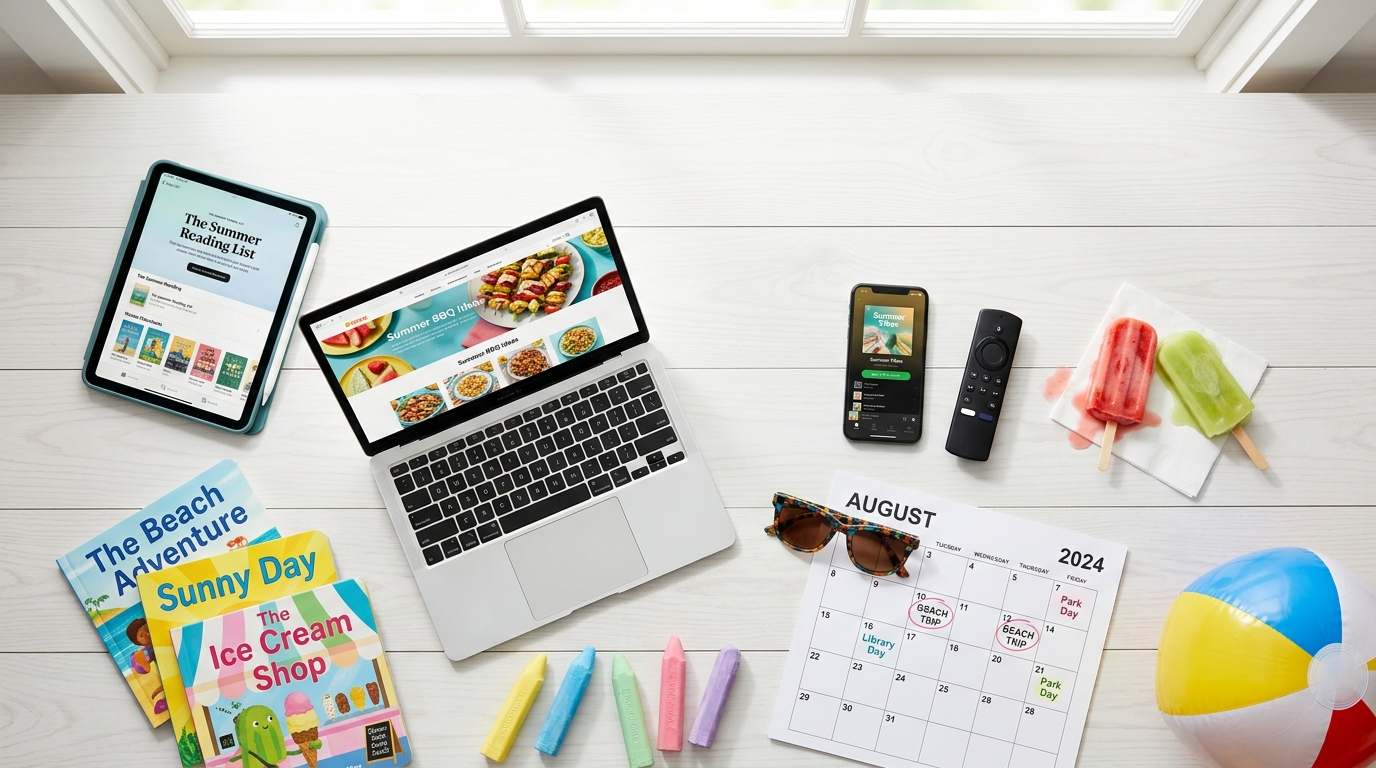
What Working Parents Can Do This Summer
You do not need a perfect plan, but you do need a usable one.
Start here:
1. Separate the screens
Do not treat TVs, phones, computers, and tablets as if they all function the same way.
They do not.
Phones usually need tighter boundaries.
TV may be easier to monitor.
Computers may need purpose-based rules.
Tablets may need time-based limits.
2. Build rhythm before restriction
Children handle limits better when the day has shape.
Think:
movement
outside time
reading
quiet play
helping
screen time
Now screens are part of the day, not the whole day.
3. Use screens as a bridge
A screen can help you finish work.
It can help you make dinner.
It can get you through the hottest, crankiest part of the afternoon.
That does not make you lazy.
It makes you resourceful.
4. Watch the phone most closely
Phones tend to be the hardest screens to contain because they travel everywhere.
Common Sense Education notes that kids use their phones a median of 43 minutes a day at school alone, showing how easily phones become part of the daily rhythm.
5. Plan for boredom before it starts
If every “I’m bored” moment ends with a screen, it is usually because nobody has the energy to think of anything else.
Make a short boredom menu.
Keep it visible and simple.
Reduce the number of decisions you have to make in real time.
When the Day Gets Away From You, Do Not Spiral
Some days, the TV will stay on too long.
Some days, the phone battle will wear you down.
Some days, the laptop will drift from learning to entertainment.
Some days you will use screens more than you want.
That does not make you a bad parent.
It makes you a parent in a hard moment.
Reset the next hour, not your whole identity.
Go outside, eat dinner together, turn on music, or read a book.
Thank try again tomorrow.
Grounded parenting find ways to repair, not perfect.
You Do Not Need More Shame. You Need Better Support.
Many families are trying to undo a school-year screen rhythm while surviving a summer with limited support. You can still lead your home with wisdom, even if screens are part of the story.
If this message feels like it puts words to something you have been carrying, I want to invite you to stay connected.
Join My Weekly Newsletter
My weekly newsletter is for parents who are ready to let go of shame, own the journey, and lead their homes and lives with more intention.
It is where I share:
practical parenting insight
honest encouragement
identity-centered reminders
support for parents doing a lot with limited help
Join my weekly newsletter for truth, strategy, and support that actually meets you where you live.
You do not need more guilt. You need reminders that help you keep going and without pretending this season is easier than it is.


